





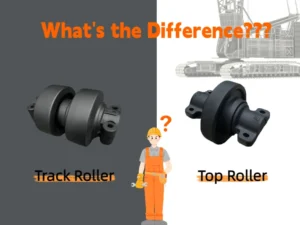
Key differences between crawler crane track rollers and carrier rollers. Learn their definitions, functions, designs, and maintenance tips to optimize crane performance and extend undercarriage lifespan.
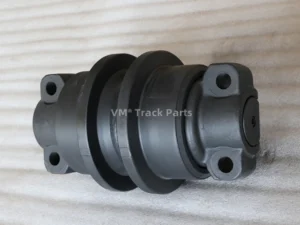
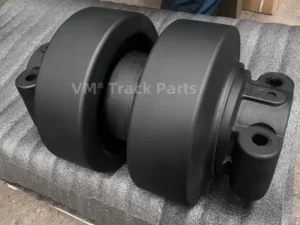
What Is a Crawler Crane Track Roller?
Definition & Position
Track rollers, also known as bottom rollers or support rollers, are located on the lower part of the undercarriage frame, directly contacting the ground through the tracks. They are the primary load-bearing components, supporting the entire weight of the crane as it moves.
Key Functions
Bear the crane’s weight and distribute it evenly across the track assembly
Maintain continuous track-ground contact for stability and traction
Absorb shocks and impacts from rough or uneven terrain
Minimize track wear by ensuring proper load distribution
Keep the track aligned during movement
Design Features
Cylindrical or barrel-shaped for durability
Made from high-strength alloy steel (e.g., 40Mn2) to withstand heavy loads
Equipped with bearings for smooth rotation
Often reinforced to resist abrasion and impacts
Why It Matters
Track rollers are the first line of defense against terrain-induced wear. Their robust design ensures the crane remains stable and operational even in challenging environments.
What Is a Crawler Crane Carrier Roller?
Definition & Position
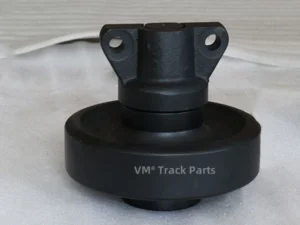
Carrier rollers, also called top rollers or upper rollers, are positioned above the track frame, near the top of the undercarriage system. Unlike track rollers, they do not touch the ground; instead, they guide the upper track loop.
Key Functions
- Support the upper section of the track chain to prevent sagging
- Maintain proper track tension and alignment
- Keep the track centered on the sprockets and idlers
- Facilitate smooth movement of the upper track loop
- Reduce wear on the top of the track
Design Features
Flatter, smoother, and often larger-diameter than track rollers
Designed for efficient guidance rather than heavy load-bearing
Typically have fewer bearings and less direct stress compared to track rollers
Why It Matters
Carrier rollers ensure the track remains aligned and tensioned, preventing derailment and extending the lifespan of the undercarriage system.
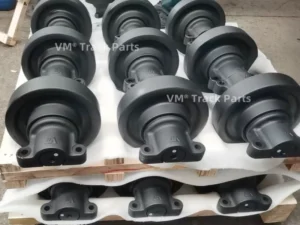
Key Differences Between Track Rollers and Carrier Rollers
| Feature | Track Rollers (Bottom Rollers) | Carrier Rollers (Top Rollers) |
| Position | Underneath the undercarriage, in direct contact with the ground | Above the track frame, guiding the upper track loop |
| Primary Function | Bear the crane’s weight, provide traction, and absorb shocks | Prevent track sagging, maintain alignment, and guide the upper track |
| Load-Bearing Capacity | Much higher (supports full crane weight) | Lower (supports only the upper track) |
| Size & Strength | Larger and sturdier (designed for heavy loads) | Smaller and lighter (focused on guidance) |
| Wear & Maintenance | Wear out faster due to ground contact and heavy loads | Longer lifespan, but still requires regular inspection |
| Impact on Performance | Affects stability, traction, and shock absorption | Affects track alignment, tension, and wear |
Why Proper Selection & Maintenance Matter
1. Performance & Efficiency
Track rollers ensure the crane remains stable and mobile on rough terrain.
Carrier rollers maintain proper track alignment, preventing derailment and unnecessary wear.
2. Lifespan & Cost Savings
High-quality rollers from reputable manufacturers extend the lifespan of the undercarriage system.
Proper selection reduces downtime and repair costs.
3. Maintenance & Durability
Track rollers require frequent inspections due to high wear.
Carrier rollers need regular lubrication and alignment checks.
Best Practices for Maintenance
For Track Rollers:
- Inspect frequentlyfor cracks, pitting, and wear
- Lubricate bearingsregularly to prevent friction
- Replace promptly if signs of excessive wear appear
For Carrier Rollers:
- Check alignment and tension during routine maintenance
- Ensure seals are intact to prevent debris ingress
- Monitor for play or looseness that could affect track guidance
General Tips:
Use genuine or high-quality aftermarket parts
Follow manufacturer-recommended maintenance schedules
Clean undercarriage regularly to prevent debris buildup

Conclusion
Track rollers and carrier rollers are both essential for the smooth operation of crawler cranes, but they serve very different purposes. While track rollers bear the crane’s weight and provide traction, carrier rollers ensure the track remains aligned, tensioned, and guided.
